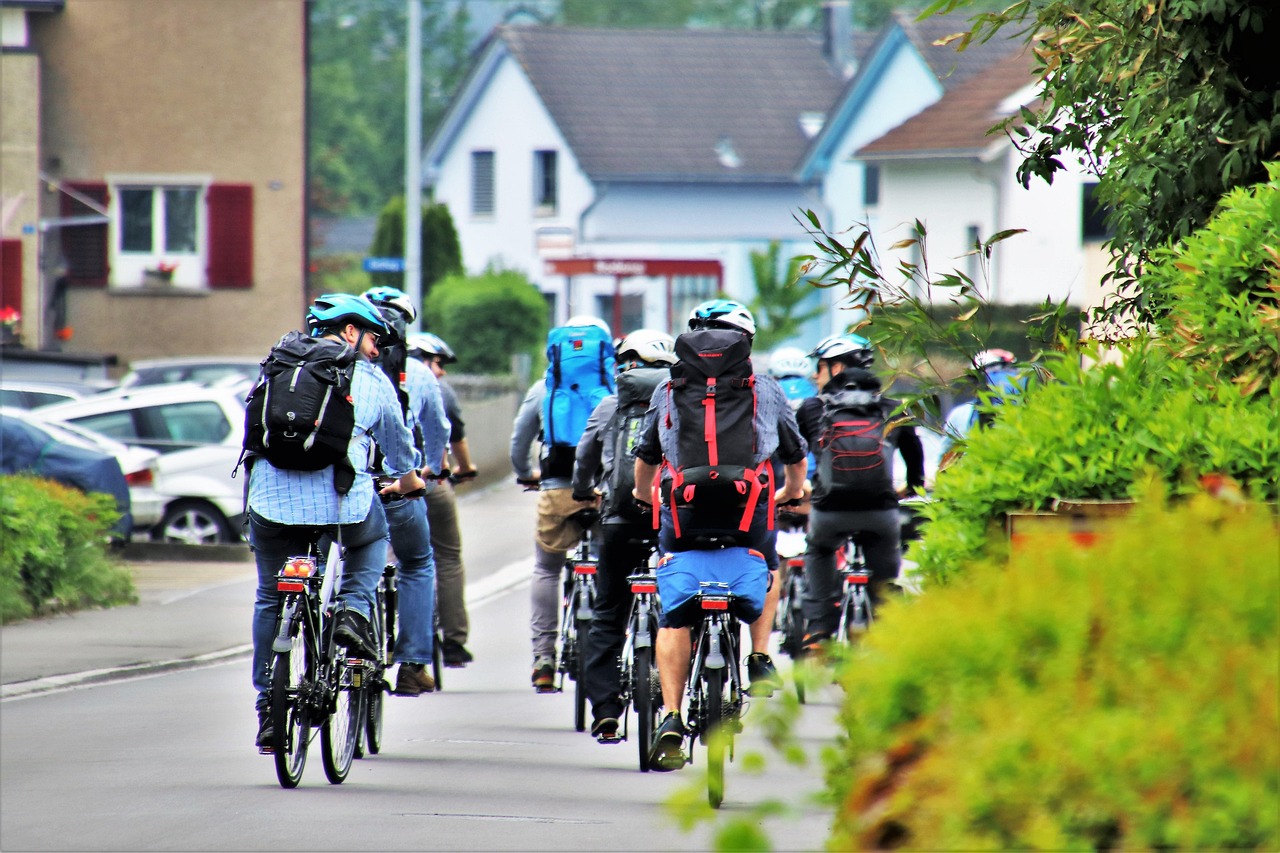
Most commuter bag reviews compare the same six features across twenty bags and then suggest the most expensive one that does all six. That's useful for building a feature list. It's not especially useful for knowing which bag to carry for the next three years.
I've been using backpacks and panniers for cycling commutes since 2017, first in Dortmund, then in Essen. What follows is what I've actually learned to pay attention to — and what I've learned to ignore.
Volume: most people get this wrong in both directions
Twenty litres is the size that sounds right and is often too large. If you fill a 20L bag to capacity every day, you are probably carrying things you don't need. The problem with a bag you can overfill is that you will. Your back will register this by April.
The sweet spot for most office commutes — laptop, lunch, a jacket, phone charger, miscellaneous — is 14 to 17 litres. If you regularly carry camera equipment, a change of clothes, or a gym kit, you need something specific to that; there's no single answer. But if you don't have a specific reason to need more than 16 litres, start there.
On the other end: 8L is genuinely enough if you don't carry a laptop. The Haulo Slim is designed around this — it's a hard sell until you try it for two weeks and realise you've been carrying six things you never touch at work.
Closures, which are the thing that fails
The main closure of a commuter bag fails in one of two ways: it stops closing properly, or it becomes an annoyance to open and close quickly. Zips on cheap bags develop slack after eight months of daily use. Magnetic snaps are fast but leak when it rains hard. Roll-tops are weatherproof and simple but add a few seconds per access.
My general preference is a roll-top main compartment with a separate quick-access zip pocket on the front for things I reach for during the day. This is not a radical design — a lot of bags do it. But look at where the quick-access pocket sits before you buy. On some designs it's unreachable when the bag is on your back. On others it's in an annoying position relative to your arm when you reach for it.
Water resistance is not waterproofing
Almost every commuter bag claims to be "water-resistant." This means the fabric has been treated and will survive light rain. It does not mean the bag survives being left in heavy rain for twenty minutes, or that rain won't get in through the zip seams. Most treated fabrics also stop being water-resistant after a year or two of washing.
Actual waterproofing requires either a welded or taped construction (like a dry bag), or a separate rain cover. The Karg panniers are waterproof by design. The Packwell Roll-Top is water-resistant in typical conditions but not in extended heavy rain. We say this clearly to the people who ask, and it's in the product descriptions.
One thing specific to scooter commuters
If you're riding an e-scooter with a backpack, centre of gravity matters more than it does on a bicycle. A heavy bag high on your back shifts your weight rearward noticeably at speed. This is particularly relevant if you brake frequently or ride at the upper end of the speed limit. Keep the heavier items (laptop, water bottle) as low in the bag as possible, and consider whether your bag's laptop sleeve puts the computer at the very top — many do, which is the worst position for scooter stability.